
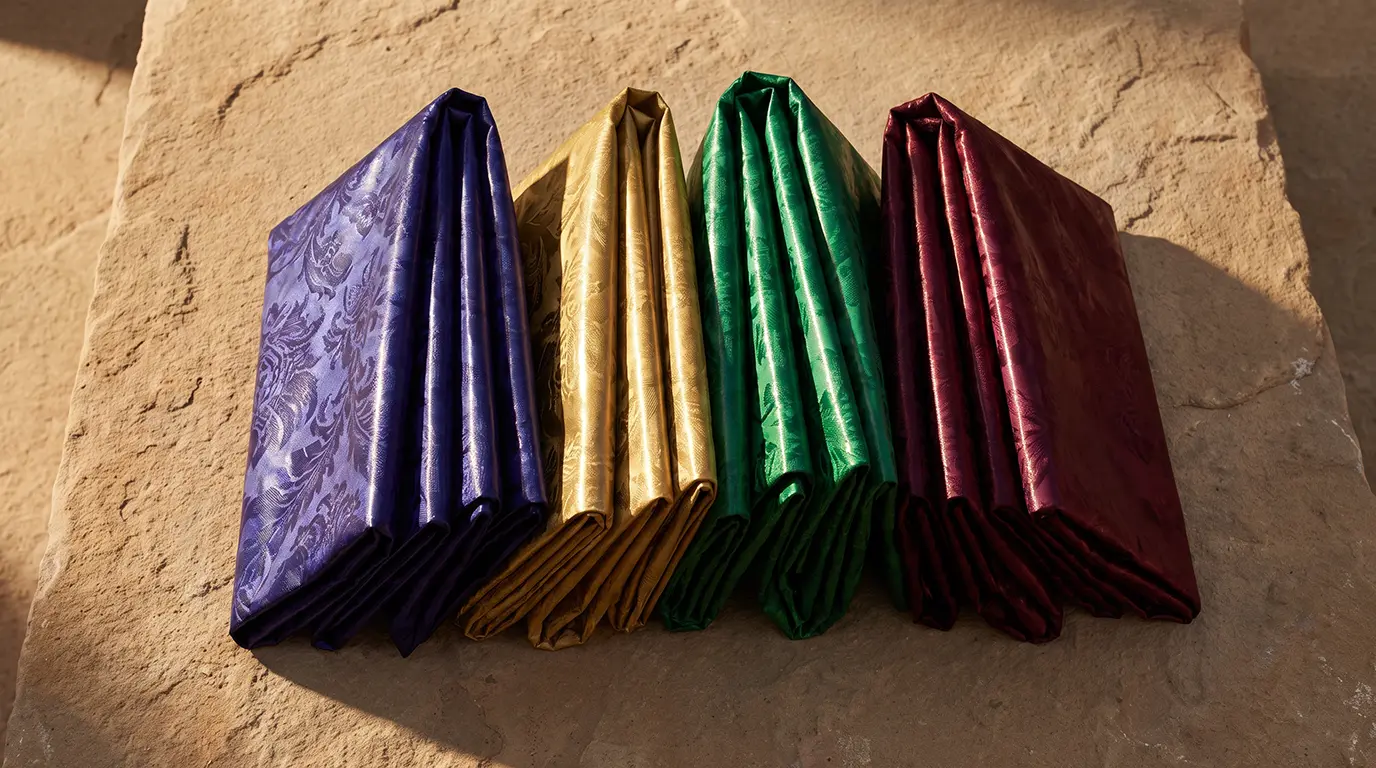
Walk into a Senegalese wedding and you’ll hear the fabric before you see it. Bazin riche makes a sound — a stiff, papery rustle that no other cloth produces.
It’s the most expensive fabric in most Senegalese wardrobes, the one reserved for the days that matter, and the one visitors most often buy badly. Here’s what it actually is.
What Bazin Riche Is
Bazin is a cotton damask — a woven fabric where the pattern is created by the weave itself rather than printed on top. The base cloth is typically produced in Europe, most famously by the Austrian mill Getzner, whose name became shorthand for quality across West Africa.
But the imported cloth is only the starting point. What makes it bazin riche happens in Mali and Senegal, by hand.
How It’s Made
1. Dyeing
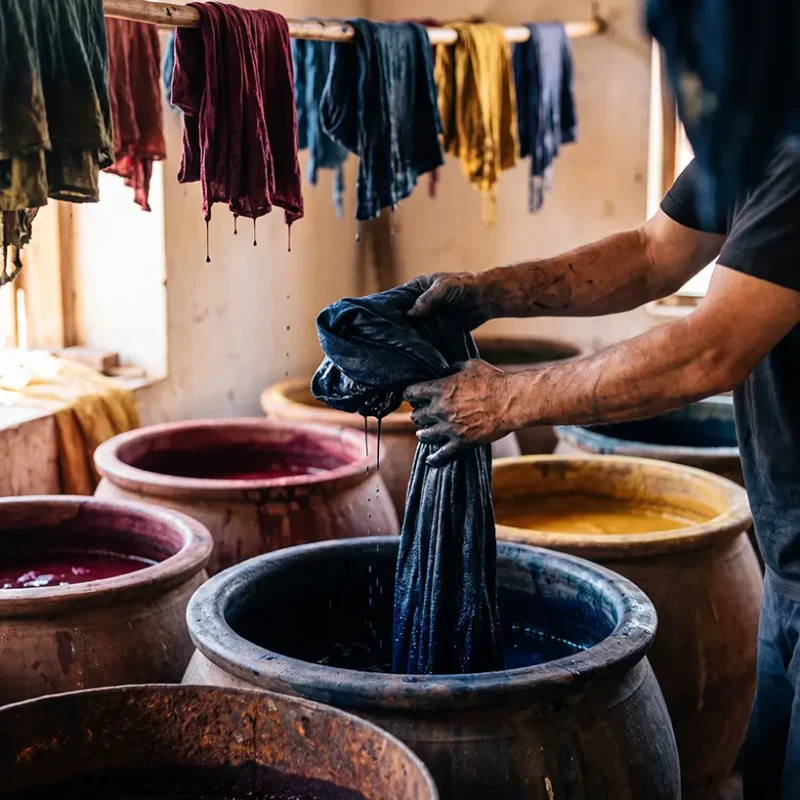
The white damask is dyed by hand, often using tie-and-fold techniques that create the tonal variations characteristic of good bazin. Deep indigo, emerald, burgundy, gold. Some pieces are dyed twice or three times to build depth.
2. Starching
The cloth is soaked in a starch solution. This is what gives bazin its body — the stiffness that makes a boubou hold its shape and fall in sharp folds rather than clinging.
3. Beating
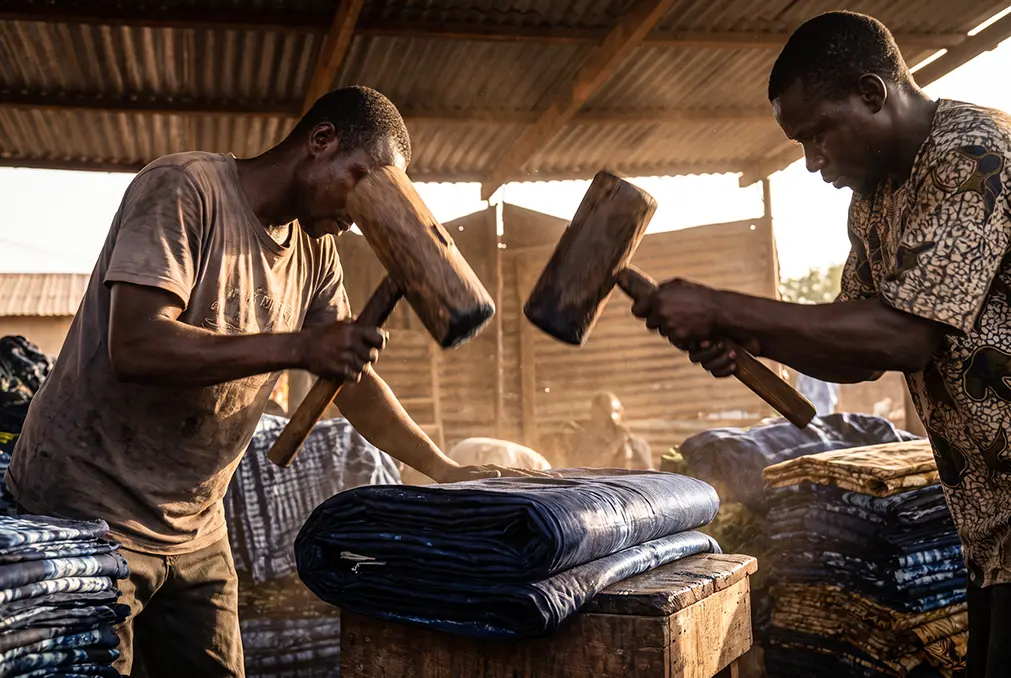
This is the step that separates bazin riche from ordinary dyed damask.
The starched cloth is beaten with heavy wooden mallets, repeatedly, by hand. The pounding compresses the fibres and burnishes the surface until it develops its distinctive sheen. You can hear the work from streets away in the neighbourhoods where it’s done.
The more it’s beaten, the higher the shine — and the higher the grade.
How to Recognise Real Bazin
Four tests, in order of usefulness:
- The sound. Rub it between your fingers. Real bazin riche crackles. Soft, silent fabric isn’t bazin, whatever the label says.
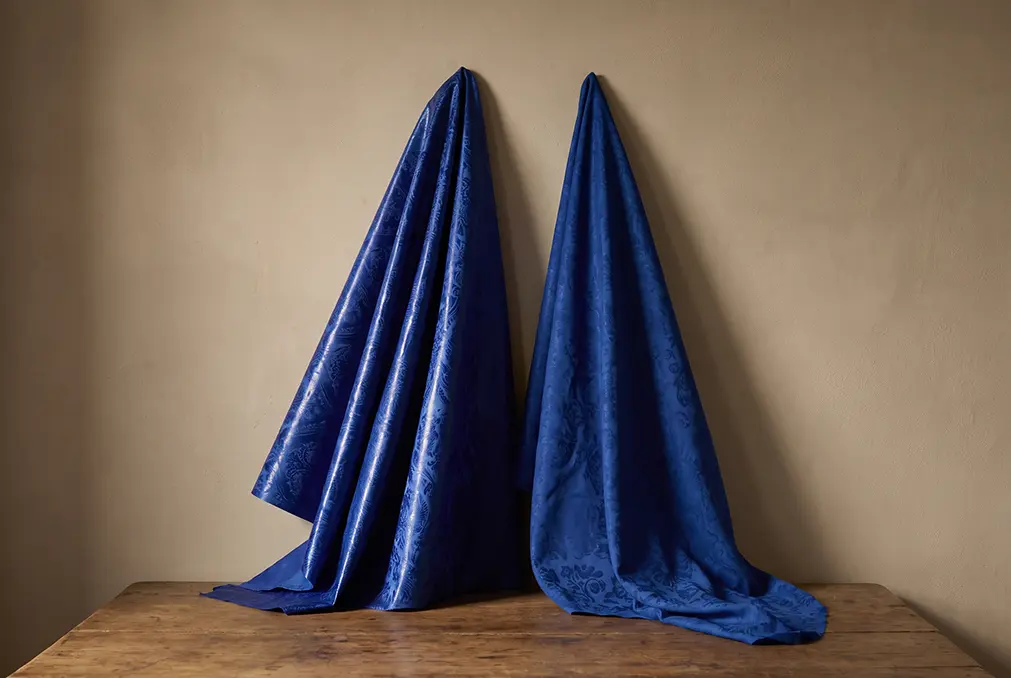
- The sheen. Look at it under angled light. Genuine bazin has a deep, almost metallic lustre that shifts as the fabric moves. Printed imitations look flat.
- The weave. Turn it over. The damask pattern should be visible on both sides — it’s woven, not printed. A pattern that exists only on the front is not damask.
- The body. Hold a length up. Bazin riche stands away from itself. It doesn’t drape softly; it holds a shape.
The Grades
Bazin is sold in quality tiers, and the difference is immediately visible to anyone Senegalese.
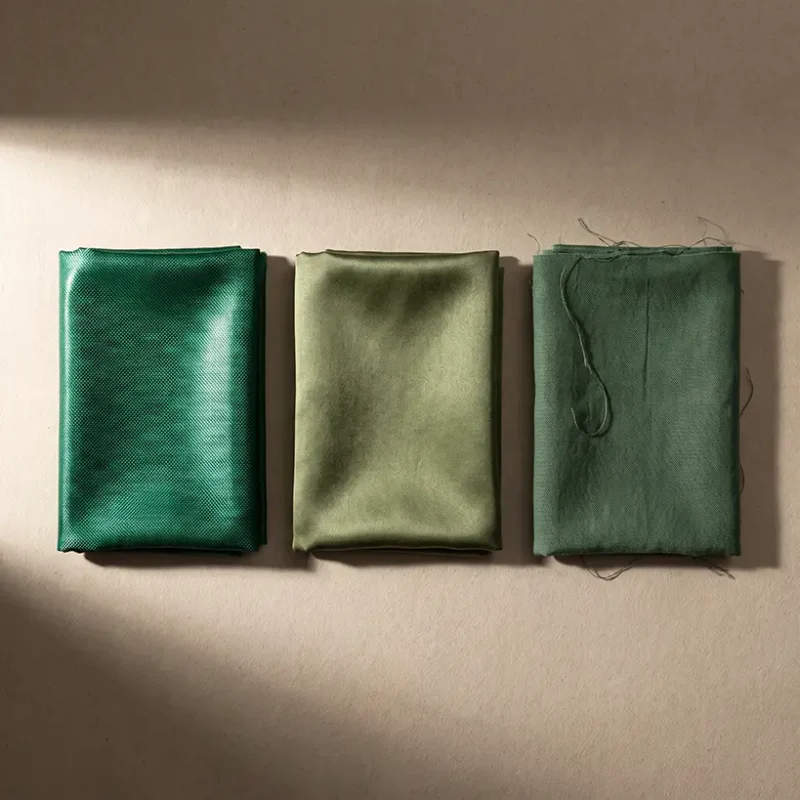
- Bazin riche — the top tier. Heavy, intensely beaten, deep sheen, hand-dyed. Reserved for weddings, Tabaski and major religious occasions.
- Mid-grade bazin — lighter, less beating, softer lustre. Used for good everyday wear and less formal celebrations.
- Basic bazin — thinner, matte, sometimes machine-processed. Functional, but nobody mistakes it for the real thing.
Within these tiers, the dye work matters too. A complex hand-dyed pattern in three tones costs considerably more than a flat single-colour dip.
What It Costs
Prices vary too widely by grade, region and year for specific figures to be useful. What’s more helpful is understanding what you’re paying for.
The cloth itself is the major expense. Unlike Europe, where tailoring costs several times the fabric, in Senegal the ratio is reversed — the bazin is the investment, and having it made up is comparatively cheap.
Three things drive the price up: the base damask quality, the amount of beating, and the complexity of the dye work. A heavily beaten, multi-tone hand-dyed piece from a known dyer can cost many times a basic single-colour length.
Buy by the piece, not the metre. Bazin is usually sold in fixed lengths — commonly five or ten yards — because a boubou needs a continuous piece from a single dye batch. Mixing batches shows.
Caring for Bazin
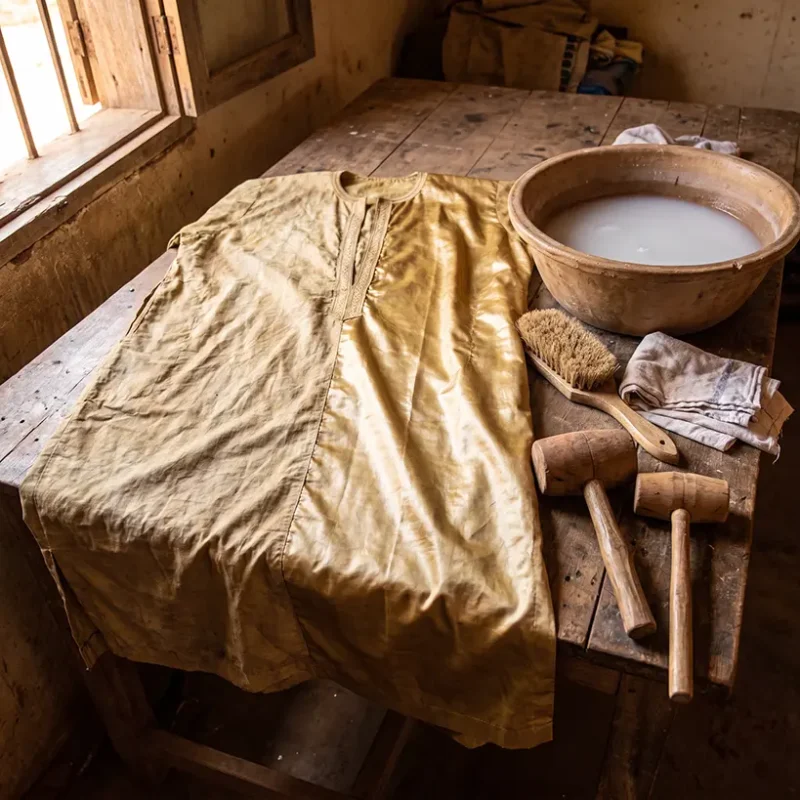
This is where most people ruin an expensive garment.
- Dry clean if you can. It’s the safest option for a heavily beaten, hand-dyed piece.
- If you hand wash: cold water, no soaking, no wringing. Wringing destroys the beaten finish permanently.
- Never machine wash high-grade bazin. The agitation flattens the sheen.
- Air dry in shade, hung flat. Direct sun fades hand dyes fast.
- Iron on the reverse, with a cloth between iron and fabric. Direct heat on the face of the fabric kills the lustre.
- Re-starching is a service, not a home job. In Senegal, you take a tired boubou to be re-starched and re-beaten. It comes back transformed.
That last point matters: bazin is designed to be restored, not replaced. A well-kept boubou lasts decades and is often passed down.
What Bazin Says
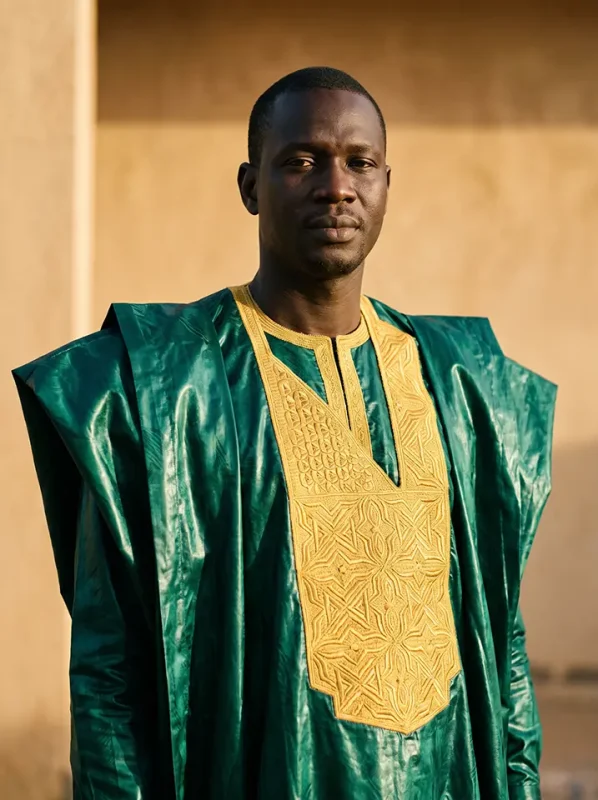
In Senegal, fabric quality communicates social standing more directly than almost anything else. Bazin riche is at the top of that language.
Wearing it signals that an occasion matters enough to invest in. A hand-embroidered bazin boubou represents weeks of skilled work across several trades — dyer, beater, tailor, embroiderer — and everyone in the room knows it.
This is exactly the context that makes the Baye Fall choice so striking. In a society that reads cloth this precisely, they chose to wear assembled scraps. Read more in our guide to ndiakhass.
Buying Bazin
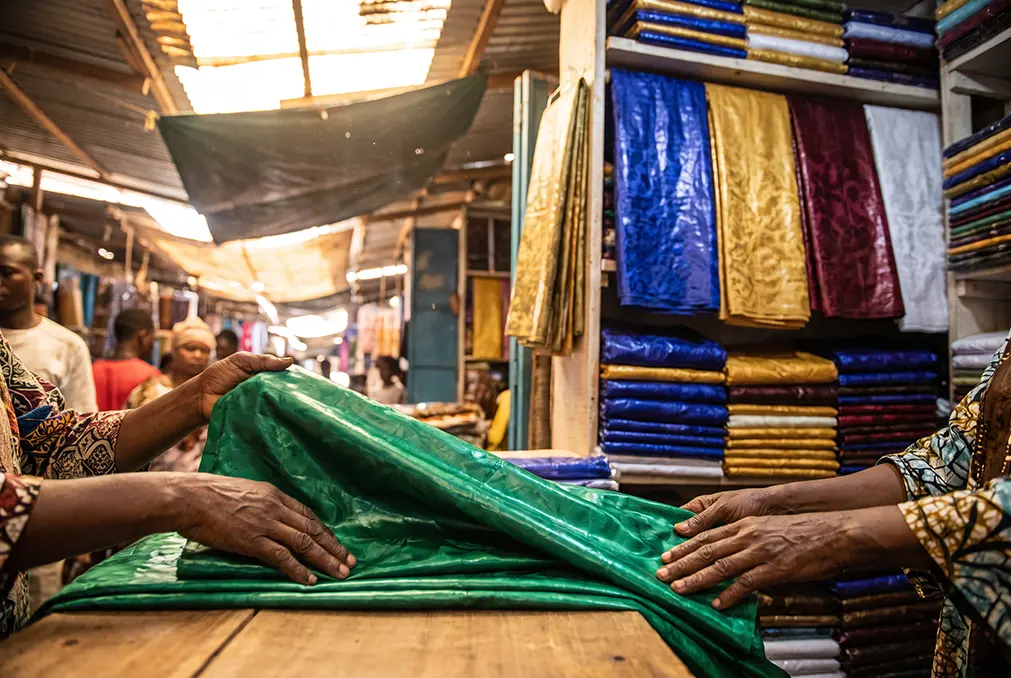
In Senegal: Sandaga and HLM markets in Dakar. Buy the cloth, then take it to a tailor — made-to-measure is the norm, not a luxury. See our piece on how Senegalese tailoring works.
In the diaspora: Château Rouge and Barbès in Paris, Little Senegal in Harlem, the Senegalese quarters of Milan and Turin. Fabric shops and tailors sit on the same streets.
Online: hard to verify. Ask the seller three questions — what grade is it, who dyed it, and how many yards is the piece. A seller who can answer all three is worth buying from.
When Bazin Isn’t the Answer
Bazin riche is cut for heat, ceremony and formality. It’s the wrong fabric for a cold Tuesday in Paris or Milan.
That’s the gap Baye Fall Spirit works in — Senegalese heritage in pieces built for everyday life abroad: the embroidered Baye Fall hoodie, the Baye Fall t-shirts, the accessories.
For the days that matter, though — find good bazin and find a tailor. Nothing else does what it does.
See also our guides to traditional Senegal clothing and what to wear for each occasion.
BayeFall Legacy: Wear the Story.
