
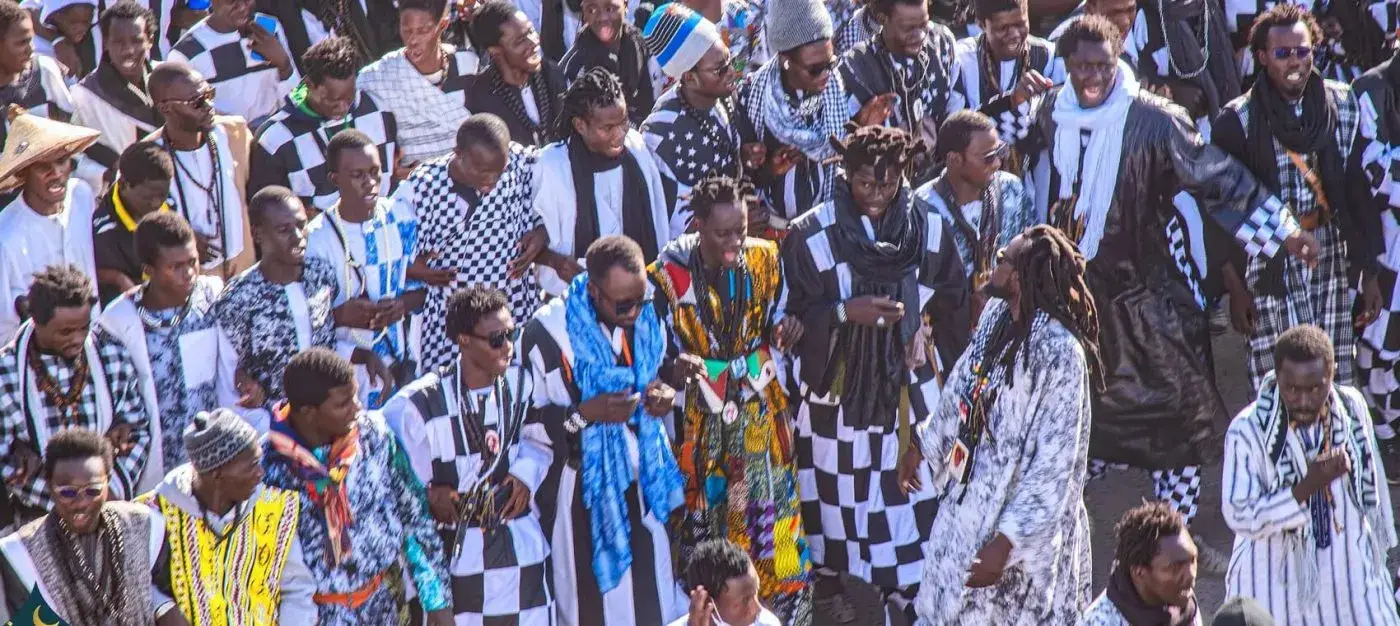
It started as the clothing of people who owned nothing. Today it’s one of the most recognisable looks in West African fashion.
The njaxass — also written ndiakhass or njaxas, depending on how the Wolof is transcribed — is the patchwork garment worn by the Baye Fall of Senegal. Here’s where it comes from, and what it actually means.
What Njaxass Is
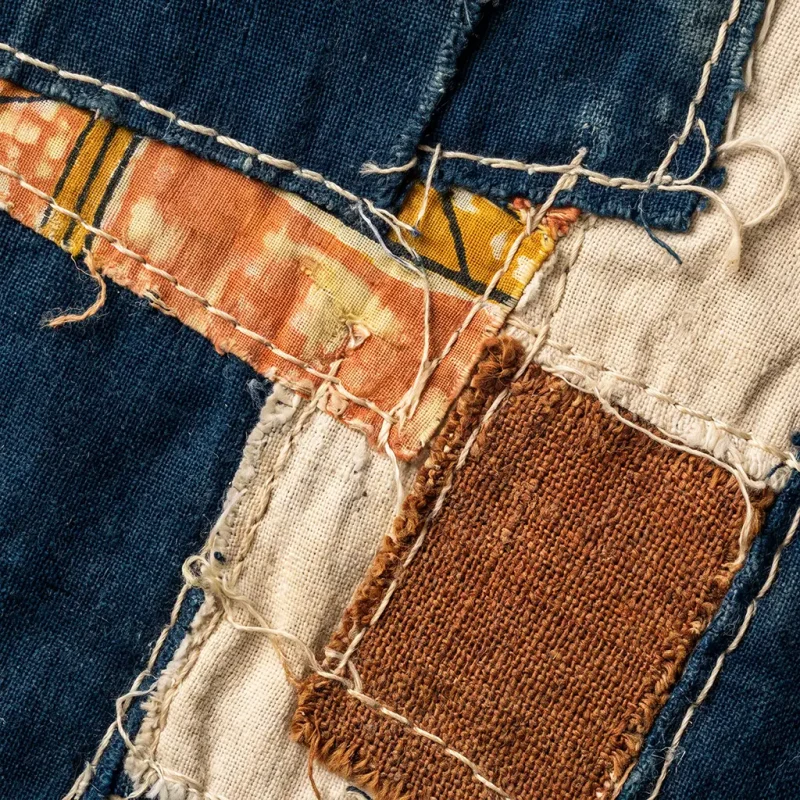
Njaxass is cloth assembled from scraps: irregular pieces of different fabrics, colours and patterns, sewn together into a single garment. No two pieces are alike, and that’s not a design decision — it’s the nature of the material.
Traditionally the pieces came from whatever was available. Offcuts from a tailor’s floor. Worn-out clothing cut down. Fabric donated by others. The result is a boubou, tunic or wrap that looks, deliberately, like it was made from nothing.
Why the Baye Fall Wear It
To understand njaxass you have to understand the movement behind it.
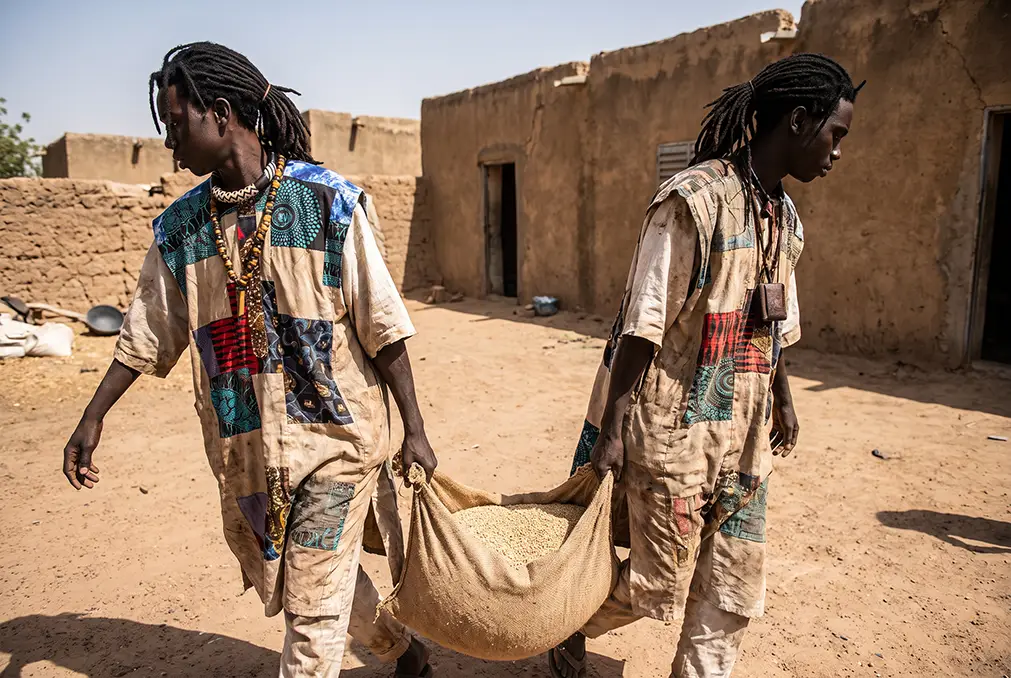
The Baye Fall are the branch of the Mouride brotherhood founded by Cheikh Ibra Fall — a Wolof nobleman, descended from the royal line of Cayor, who renounced his claim to power to serve Cheikh Ahmadou Bamba.
His teaching was khidma: selfless service. Devotion expressed through labour rather than through study or display.
Njaxass is that philosophy made visible. A man who could have worn the finest bazin in Senegal chose instead to wear scraps. The garment says: I have renounced vanity. What I own does not tell you who I am.
It’s the opposite of a status symbol, worn deliberately in a culture where clothing signals status more clearly than almost anywhere.
The Irony of Its Success
Here’s the tension at the heart of njaxass today.
A garment created to reject display has become one of the most striking visual signatures in West African fashion. Photographers seek it out. Designers reference it. It appears at fashion weeks.
Some see that as a betrayal of the original meaning. Others see it as the teaching working exactly as intended: humility became beautiful, and beauty carried the message further than austerity ever could.
Both readings are held sincerely within the community. It’s worth knowing that before wearing it.
How to Recognise Real Njaxass
- Genuine irregularity. Real patchwork has pieces of varying size, shape and fabric weight. A printed “patchwork pattern” repeats — that’s the giveaway.
- Visible seams. The stitching between panels is part of the garment, not hidden.
- Mixed materials. Cotton next to wax print next to a scrap of something heavier. Uniform fabric throughout means it wasn’t assembled from scraps.
- No two identical. If a shop has twenty of the same njaxass, they’re printed reproductions.
Printed versions aren’t inherently dishonest — they make the reference accessible and wearable in contexts where a full traditional garment wouldn’t work. The distinction worth making is whether the seller tells you which one you’re buying.
Njaxass Beyond Clothing
The Baye Fall visual identity extends past the patchwork itself:
- Dreadlocks — worn as a mark of renunciation and devotion.
- Leather amulets — containing written verses, worn on the arm or around the neck.
- Wooden clubs and prayer beads, carried during gatherings.
- Drums and chanting — Baye Fall zikr is loud, rhythmic and physical.
You’ll see all of it at the Grand Magal of Touba, where the Baye Fall are the visible engine of the pilgrimage — cooking, directing traffic and feeding strangers for days, unpaid.
Wearing It Respectfully
Njaxass isn’t a sacred object in the way a ceremonial garment can be, and it isn’t restricted to initiates. But it isn’t neutral decoration either.
Three things worth doing:
- Know what it means. If you can explain that it comes from a philosophy of humility and service, you’re wearing it, not appropriating it.
- Don’t reduce it to a print. “African patchwork” empties it. “Njaxass, from the Baye Fall of Senegal” doesn’t.
- Buy from people connected to it. The money question is usually the honest one.
Njaxass in Contemporary Design
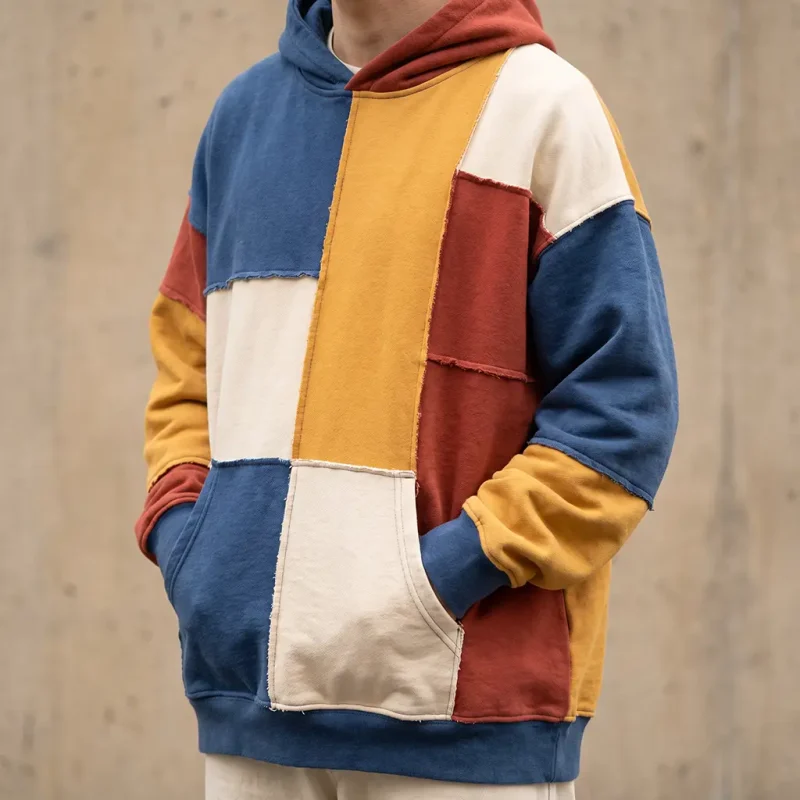
The patchwork translates unusually well into modern clothing, because it was always about assembly rather than a fixed pattern. Contemporary interpretations show up as panelled jackets, patchwork-print hoodies, tote bags built from mixed offcuts, and accent panels on otherwise plain garments.
It also sits naturally within streetwear — arguably it was streetwear before the term existed: made from what was available, worn as a statement, instantly readable to anyone who knew the code. More on that in our guide to African streetwear.
Where to Find It
In Senegal — Touba and Dakar, particularly around Baye Fall communities and the markets that serve them. Tailors will assemble a njaxass to order.
From us — Baye Fall Spirit builds directly on this tradition. The Baye Fall hoodie and the Baye Fall t-shirts carry njaxass-inspired design in contemporary cuts, and the accessories follow the same logic.
We’re clear about what these are: modern pieces referencing a tradition, not hand-assembled ceremonial garments. That distinction matters, and we’d rather state it than blur it.
The Point of It
Scraps, sewn together by people who had renounced the desire to impress — and it became one of the most photographed looks on the continent.
That’s not an accident of fashion. It’s what happens when a garment carries a real idea.
Read more on Baye Fall history and Mame Cheikh Ibrahima Fall’s legacy, or browse the collection.
BayeFall Legacy: Wear the Story.
